
The cuff decides your number more than the brand does
A cuff that does not fit can move a blood pressure reading by 5 to 15 mmHg, which is enough to change what a doctor does next. So we start with your arm, then work through rhythm screening, syncing and price. Every model here is checked as still sold under the exact number we name.
Start with your arm, not with a brand
Use a cloth tape, not a steel one. Not sure? The sizing guide walks you through it.
Or compare all 19 monitors and see our picks.

- Every model checked as still sold
- Cuff ranges from the maker's documents
- Clearance numbers checked in the FDA database
- No lab, and no testing claims
Three monitors worth your money
Chosen on cuff range, what the device does about an irregular rhythm, and whether you can get the readings back out again. Not on how the box looks.
We earn a commission if you buy through links on this page. It costs you nothing extra, and it does not change which monitors we recommend.
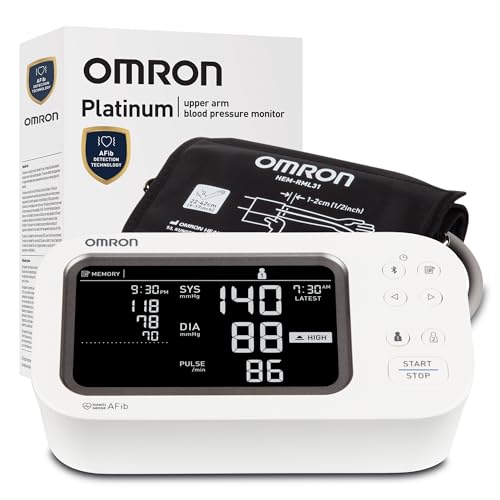
Most homes. It screens for AFib and flags high morning readings.
- Fits
- 9 to 17 inches
- Users
- 2
- Rhythm
- Screens for AFib
- Typical price
- $50 to $100
- Independent evidence
- ISO 81060-2
Skip it if: Three or more people need their own slot

Households where several people share one monitor.
- Fits
- 8.7 to 16.5 inches
- Users
- 8
- Rhythm
- None
- Typical price
- $100 to $200
- Independent evidence
- AAMI + ISO 81060-2
Skip it if: You want an ECG, which it does not have

Travel. The whole monitor is the cuff, so it packs flat.
- Fits
- 9 to 17 inches
- Users
- 1
- Rhythm
- Flags an irregular beat
- Typical price
- $50 to $100
- Independent evidence
- ESH-IP + ISO 81060-2
Skip it if: More than one person needs stored readings
Shop by what matters
Most people arrive with one constraint that rules out most of the field. Start from yours. The count on each card is how many of the 19 current monitors actually qualify, and the included cuff is what counts as a fit, never a cuff sold separately.
- Large armsWhich cuffs actually reach, in the box17 of 19 qualify
- Small armsWhere the included cuff floor sits18 of 19 qualify
- No appNo phone, no account, no pairing5 of 19 qualify
- Two peopleSeparate histories, not shared lists9 of 19 qualify
- Four usersFour slots, and the memory arithmetic5 of 19 qualify
- Wi-FiUploads with no phone in the room2 of 19 qualify
Or settle a specific comparison
The widest included cuff we track reaches 17 inches and the narrowest starts at 8.6. If you are outside that, the large-arm and small-arm guides say so plainly rather than selling you something that does not fit.
What we check before a monitor appears here
That it is still the model on the box
Manufacturers rename lines without warning. Omron retired its entire numbered range and moved the names onto new hardware, so a great many articles still recommend a Platinum that has not been made for years. Every model here is verified against the live retail catalogue, and retired models are marked as retired rather than quietly relinked to a successor.
That the cuff range is the maker's number
Cuff ranges are the most frequently mis-stated specification in this category, usually because a retailer listing copied a different variant. We take the range from the manufacturer's own documentation, and where a model needs a larger cuff sold separately, we say so instead of pretending one size covers everyone.
That a clearance number is real
A 510(k) number looks authoritative whether or not it belongs to the device beside it. We check every clearance we print against the FDA's own database. It is worth doing: a well-formed number can belong to something else entirely, and no spellchecker will ever catch that.
That we are not inventing expertise
We do not run a lab and we do not employ clinicians, so we do not claim to. Every accuracy figure here came from a published study or the maker's own validation notes, and it is linked. Read the editorial policy if you want the whole method.
Start with your question
- Compare every monitorAll current models, filterable by arm size and features
- Best for seniorsBig numbers, one button, no phone needed
- Best for AFibWhich monitors screen for atrial fibrillation by name
- Cuff sizingMeasure your arm before you buy anything
- Upper arm vs wristWhy the arm wins, and when a wrist is fine
- How to measure correctlyThe steps that change your number most
- What validation meansCleared, validated and listed are three different things
- Best under $50Cheap monitors that still measure accurately
We earn a commission if you buy through links on this page. It costs you nothing extra, and it does not change which monitors we recommend.