
Omron Platinum BP5465 vs Omron Gold BP5360
By the BP Monitor Lab editorial team · Written from manufacturer documentation and published guidance, not from our own device testing · Updated: October 5, 2026 · Sources last checked: August 31, 2026
Is the Omron Platinum better than the Omron Gold?
A little. The Platinum BP5465 and the Gold BP5360 share the same 9 to 17 inch cuff, the same two user slots, the same Possible AFib detector, the same Bluetooth, and the same validation record: Omron publishes ISO 81060-2 for both and leaves ESH-IP, AAMI and BHS blank for both.
The differences, from Omron's manuals: the Platinum has TruRead, which takes three readings in a row and averages them, stores 100 readings per person to the Gold's 80, and comes with an AC adapter. If you want none of those, buy whichever is cheaper on the day.
We earn a commission if you buy through links on this page. It costs you nothing extra, and it does not change which monitors we recommend.
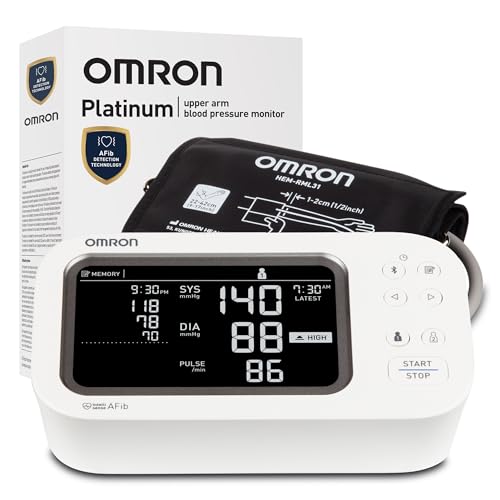
Omron Platinum
Omron BP5465
Choose it if
- +You want TruRead to take three readings and average them for you
- +You want the extra twenty readings per person, or the AC adapter
- +It is the same price or cheaper on the day
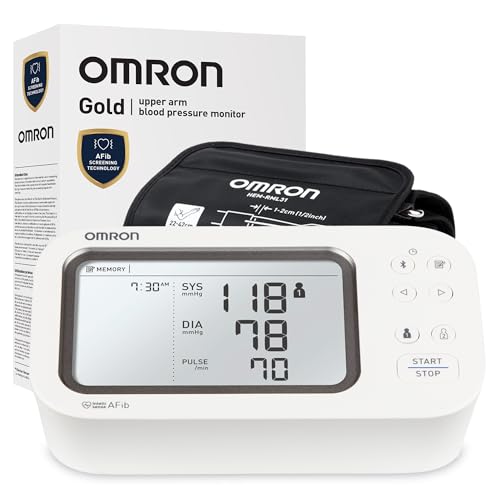
Omron Gold
Omron BP5360
Choose it if
- +It is cheaper on the day, which it usually is
- +You do not need TruRead or an AC adapter
- +Eighty readings per person is plenty for your logging pattern
Neither is best if
You need three or more people to have their own history, or your arm is outside 9 to 17 inches. Both of those rule out this pair entirely, and the full comparison table will show you what is left.
2 of 12 specifications differ. Every value is read from our product records, so this table cannot disagree with either review.
| Specification | Omron Platinum BP5465 | Omron Gold BP5360 |
|---|---|---|
| Exact modeldiffers | Omron BP5465 | Omron BP5360 |
| Lifecycle | Current | Current |
| Included cuff | 9 to 17 inches | 9 to 17 inches |
| Stored users | 2 | 2 |
| Readings per userdiffers | 100 | 80 |
| Averaging | Yes, the device averages for you | Yes, the device averages for you |
| Rhythm | Screens for AFib | Screens for AFib |
| Syncing | Bluetooth | Bluetooth |
| Phone app | App optional | App optional |
| Power | 4 x AA alkaline, or the optional Omron AC adapter | 4 x AA alkaline, or the optional Omron AC adapter |
| Independent evidence | ISO 81060-2, plus US validated device listing | ISO 81060-2, plus US validated device listing |
| Typical price | $50 to $100 | $50 to $100 |
What genuinely differs
TruRead, twenty readings and an AC adapter. That is the list, read from the two manuals. At the AHA protocol of two readings each time you measure, morning and evening, twenty readings is five extra days before the device starts overwriting the oldest, and both models sync to Omron Connect where the history is unlimited anyway.
We are not going to inflate that into a verdict. If you have both in front of you at different prices, the cheaper one is the better buy.
What is identical, and worth knowing
Both screen for atrial fibrillation by name rather than only flagging an irregular beat, which is the feature that separates this pair from most of the Omron line. Both hold the narrower validation record: Omron publishes ISO 81060-2 for them and leaves ESH-IP blank, where the cheaper Silver, Bronze, Iron and Evolv all carry ESH-IP alongside ISO.
That is a genuinely odd fact about Omron's lineup and it is worth stating plainly: on published validation protocols, the two AFib models have the narrower record, not the wider one. It does not make them inaccurate. It does mean the marketing hierarchy and the evidence hierarchy do not match.
Neither, if your arm is the problem
Both include the same 9 to 17 inch cuff. If you measure outside that, the choice between them is irrelevant, and our large-arm and small-arm guides are the better place to start.
Common questions
What is the difference between Omron Platinum and Omron Gold?
Three things, going by Omron's manuals. The Platinum BP5465 has TruRead, which takes three readings in a row and shows the average. The Gold BP5360 does not. The Platinum stores 100 readings per person to the Gold's 80. And the Platinum's box includes an AC adapter. Cuff, user slots, AFib screening, connectivity and published validation are the same on both.
Do both the Omron Platinum and Gold screen for AFib?
Yes. Both have Omron's Possible AFib detector, which flags the possibility of atrial fibrillation during a reading rather than only marking an irregular beat. Neither diagnoses anything; only a clinician can do that, normally with an ECG.
Which has better validation, the Platinum or the Gold?
Neither. Omron publishes ISO 81060-2 for both and leaves ESH-IP, AAMI and BHS blank for both. Oddly, the cheaper Silver, Bronze, Iron and Evolv models carry ESH-IP alongside ISO, so on published protocols they have the wider record.
Is the Omron Platinum worth the extra money?
Only if TruRead, the extra twenty readings or the AC adapter are worth it to you. There is no difference in the published validation between them. When the Gold is cheaper and you do not want those three things, the Gold is the better buy.
Where this comes from
Guideline and evidence last checked: 2026-10-05. We publish what these sources say. Where they decline to give a rule, we say that instead of inventing one.
- •Home Blood Pressure Monitoring, American Heart Association
- •Screening for Atrial Fibrillation: US Preventive Services Task Force Recommendation Statement, US Preventive Services Task Force, 2022-01-25