
Omron Gold BP5360 Review: The Cheaper Way to Get AFib Screening
By the BP Monitor Lab editorial team · Written from manufacturer documentation and published guidance, not from our own device testing · Last checked: August 30, 2026
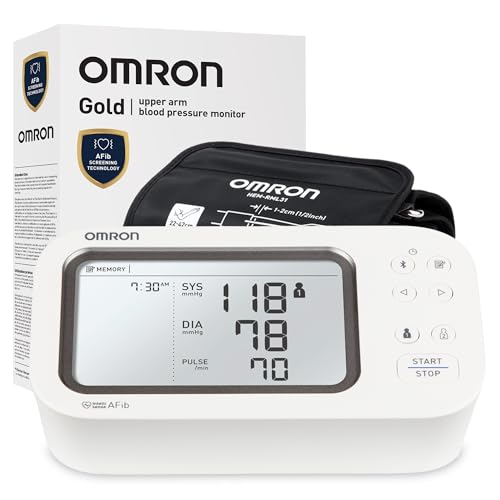
Only two monitors in Omron's home line screen for atrial fibrillation by name rather than flagging an uneven pulse: the Platinum BP5465 and this one. The Gold costs a little less and does the screening identically. What you give up is memory depth, and the difference is smaller than the two names suggest.
- Brand
- Omron
- Model number
- BP5360
- Lifecycle
- Current
- Also sold as
- Replaced the BP5350, which had no AFib symbol at all
Independent validation: we can cite one
A listing or published study names this exact model.
Omron publishes ISO 81060-2 validation for the BP5360. It does not list ESH-IP, AAMI, BHS for this model.
What Makes This One Different
The Gold and the Platinum are closer than Omron's naming implies. Both define a Possible AFib detector in their manuals. Both flag a high morning average. Both take the same wide-range D-ring cuff at 9 to 17 inches, and both store two users. The Platinum adds TruRead, which takes three readings a minute apart and averages them, and holds 100 readings per user against the Gold's 90. That is the whole gap.
Specifications
- Cuff
- 9 to 17 inches
- Stored users
- 2
- Readings per user on device
- 90
- App storage
- Unlimited via the app
- Syncing
- Bluetooth
- Rhythm
- Screens for AFib
- Typical price
- $50 to $100
The AFib Detector Behaves the Same Way Here
Including the part that alarms people. When the Gold suspects atrial fibrillation it does not display the reading at all. Omron states that blood pressure and pulse measured during AFib are generally unreliable, so the monitor withholds a number it does not trust. A blank result is the device working. Our Omron symbol decoder covers every symbol this model can show, and which ones it shares with the rest of the line.
The Validation Detail That Trips People Up
Omron publishes ISO 81060-2 for the BP5360 and leaves ESH-IP blank. The BP5350 it replaced carries ESH-IP as well, so the newer model has the narrower published record here. This is the same pattern as the Platinum, and it catches people out because the older model's credential is still quoted widely across the web.
A validation belongs to the model that earned it. If a broader published record matters to you, the Silver BP5255 carries ESH-IP alongside ISO 81060-2 — but it screens only for an irregular beat, not for AFib.
Buy it if
- +You want AFib screening and would rather not pay Platinum money for it
- +Two people will share the monitor, each with their own history
- +Your arm is between 9 and 17 inches, which the included cuff covers
- +You will use Omron Connect, since 90 readings per user is the on-device ceiling
Skip it if
- -You want the monitor to average three readings for you, which is TruRead on the Platinum
- -You want the broader published record, which the cheaper Omrons carry and this one does not
- -Three or more people need their own slots
- -You want a trace rather than a screening flag, which means the Complete BP7900
Closest Alternatives
| Model | Cuff | Users | Rhythm | Validation | Price |
|---|---|---|---|---|---|
| Omron Platinum BP5465 | 9 to 17 inches | 2 | Screens for AFib | Cited | $50 to $100 |
| Omron Silver BP5255 | 9 to 17 inches | 1 | Flags an irregular beat | Cited | $50 to $100 |
| Omron Complete 2-in-1 BP7900 | 9 to 17 inches | 1 | Records an ECG | Cited | $100 to $200 |
The Platinum adds TruRead averaging and ten more readings per user. The Silver drops AFib screening but carries ESH-IP alongside ISO 81060-2. The Complete records an actual trace.
We earn a commission if you buy through this link. It costs you nothing extra.
Check the Omron Gold BP5360 on AmazonEvidence record
Every fact on this page comes from this record. It is the same record that fills the comparison table, so the two can never disagree.
| Brand | Omron |
|---|---|
| Exact model | BP5360 |
| Lifecycle | Current |
| Included cuff | 9 to 17 inches |
| Rhythm | Screens for AFib |
| Stored users | 2 |
| Readings per user on device | 90 |
| Syncing | Bluetooth |
| Averaging | Yes, the device averages for you |
| Power | 4 x AA alkaline, or the optional Omron AC adapter |
| Independent validation | We can cite a listing or study for this exact model |
| What the maker publishes | Omron publishes ISO 81060-2 validation for the BP5360. It does not list ESH-IP, AAMI, BHS for this model. |
| FDA clearance | Not confirmed by us in the FDA database |
| Retail ASIN | B0DXXCTQD9 |
| Typical price | $50 to $100 |
| Facts rechecked | 2026-08-31 |
Frequently Asked Questions
What is the real difference between the Omron Gold and Platinum?
TruRead and memory depth. Both screen for AFib by name, both flag a high morning average, both take the same 9 to 17 inch cuff and both store two users. The Platinum adds TruRead, which takes three readings a minute apart and averages them, and holds 100 readings per user against the Gold's 90.
What validation does Omron publish for the BP5360?
ISO 81060-2 only. Omron's table leaves ESH-IP, AAMI and BHS blank for the BP5360. The BP5350 it replaced does carry ESH-IP, so this is one of the rare cases where the newer model has the narrower published record. Omron lists no AAMI or BHS check for any model we cover.
Why did my Gold show no numbers after a measurement?
If it detected a possibility of atrial fibrillation, it withholds the reading. Omron states pressure and pulse measured during AFib are not reliable, so the device declines to show a figure rather than show a misleading one.
Is the BP5360 the same as the BP5350?
No, and the difference matters. The BP5350 has no AFib symbol anywhere in its manual. If you buy one secondhand expecting AFib screening you will not get it.
Sources
- -Omron Gold BP5360 product listing and specifications (source)
- -Omron BP5360 instruction manual, revision 3146816-1D (source)
- -Omron clinical validation listing (source)