
Omron Silver BP5255 Review: Single User, Broadest Validation in the Line
By the BP Monitor Lab editorial team · Written from manufacturer documentation and published guidance, not from our own device testing · Last checked: August 30, 2026
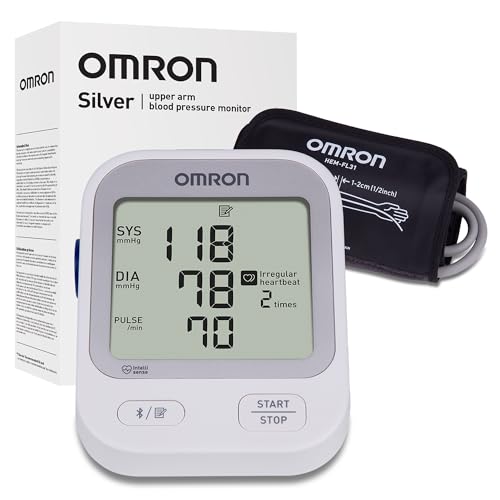
There is a quiet oddity in Omron's home range. The Silver, which sits below the Gold and Platinum on price and features, has a broader published validation record than either of them. If the credential matters more to you than the rhythm feature, the cheaper monitor is the better evidenced one.
- Brand
- Omron
- Model number
- BP5255
- Lifecycle
- Current
- Also sold as
- Replaced the BP5250
Independent validation: we can cite one
A listing or published study names this exact model.
Omron publishes ESH-IP and ISO 81060-2 validation for the BP5255. It does not list AAMI, BHS for this model.
What Makes This One Different
Omron lists ESH-IP and ISO 81060-2 for the BP5255. For the Platinum BP5465 and Gold BP5360 it lists ISO 81060-2 alone. That is not a small print curiosity if you are choosing on evidence: the monitor with fewer features has the fuller record. What you give up is AFib screening by name, a second user slot and memory depth.
Specifications
- Cuff
- 9 to 17 inches
- Stored users
- 1
- Readings per user on device
- 30
- App storage
- Unlimited via the app
- Syncing
- Bluetooth
- Rhythm
- Flags an irregular beat
- Typical price
- $50 to $100
What the Silver Does Not Do
One user, thirty readings. There is no second slot and no guest mode, so a couple sharing this monitor will interleave their readings in one list. It flags an irregular heartbeat but does not screen for atrial fibrillation by name, which on Omron's line is a genuinely different feature rather than a rebadged one.
It does add a hypertension indicator, which lights when a reading is above the threshold, and it takes the easy-wrap ComFit cuff at 9 to 17 inches rather than the D-ring style used higher up the range.
The Line Is Not Ranked by Evidence
It is easy to read Bronze, Silver, Gold and Platinum as a quality ladder where more money buys a better-proven device. On published validation that is not what happens.
| Model | What Omron publishes | Rhythm |
|---|---|---|
| Bronze BP5150 | ESH-IP, ISO 81060-2 | Irregular beat |
| Silver BP5255 | ESH-IP, ISO 81060-2 | Irregular beat |
| Gold BP5360 | ISO 81060-2 only | AFib screening |
| Platinum BP5465 | ISO 81060-2 only | AFib screening |
The two cheaper models carry the broader record. The two expensive ones trade a published standard for a rhythm feature. Neither is wrong and Omron hides none of it, but it does mean the honest question is which of the two you actually want. With no reason to suspect an arrhythmia, the Silver gives you the fuller evidence for less money. If atrial fibrillation is the reason you are buying at all, the Gold BP5360 is the cheapest way to get screening for it.
Buy it if
- +You are the only person using it
- +You want the broadest published validation Omron offers on a home monitor
- +Thirty readings on the device is enough because you will use the app
- +You want an Omron without paying for rhythm screening you will not use
Skip it if
- -Two people need separate histories, which means the Gold or Platinum
- -You want AFib screening by name
- -You want the monitor to average three readings for you
- -You will not use the app and need more than 30 readings kept
Closest Alternatives
| Model | Cuff | Users | Rhythm | Validation | Price |
|---|---|---|---|---|---|
| Omron Gold BP5360 | 9 to 17 inches | 2 | Screens for AFib | Cited | $50 to $100 |
| Omron Bronze BP5150 | 9 to 17 inches | 1 | Flags an irregular beat | Cited | Under $50 |
| A&D Medical UA-651BLE UA-651BLE | 9 to 14.6 inches | 1 | Flags an irregular beat | Cited | $50 to $100 |
The Gold adds AFib screening and a second user but drops ESH-IP from its listing. The Bronze is cheaper with far less memory. The A&D UA-651BLE is the other well-evidenced single-user option.
We earn a commission if you buy through this link. It costs you nothing extra.
Check the Omron Silver BP5255 on AmazonEvidence record
Every fact on this page comes from this record. It is the same record that fills the comparison table, so the two can never disagree.
| Brand | Omron |
|---|---|
| Exact model | BP5255 |
| Lifecycle | Current |
| Included cuff | 9 to 17 inches |
| Rhythm | Flags an irregular beat |
| Stored users | 1 |
| Readings per user on device | 30 |
| Syncing | Bluetooth |
| Averaging | Yes, the device averages for you |
| Power | 4 x AA alkaline, or the optional Omron AC adapter |
| Independent validation | We can cite a listing or study for this exact model |
| What the maker publishes | Omron publishes ESH-IP and ISO 81060-2 validation for the BP5255. It does not list AAMI, BHS for this model. |
| FDA clearance | Not confirmed by us in the FDA database |
| Retail ASIN | B0DDZP9R7T |
| Typical price | $50 to $100 |
| Facts rechecked | 2026-08-31 |
Frequently Asked Questions
Is the Omron Silver validated?
Yes, and more broadly than the models above it. Omron publishes ESH-IP and ISO 81060-2 for the BP5255. For the Platinum BP5465 and Gold BP5360 it publishes ISO 81060-2 alone and leaves ESH-IP blank. Omron lists no AAMI or BHS check against any model we cover.
Does the Silver screen for AFib?
No. It flags an irregular heartbeat, which is a different and weaker signal. Omron's AFib screening by name is on the Platinum BP5465 and Gold BP5360 only.
How many people can use it?
One. There is no second user slot and no guest mode. Two people sharing it will see their readings mixed in a single memory of thirty.
Sources
- -Omron Silver BP5255 product listing and specifications (source)
- -Omron BP5255 instruction manual, revision 3144689-3B (source)
- -Omron clinical validation listing (source)